 Call: (864) 279-4405


- Upstate SC Crew
Serving homeowners in Greenville, Spartanburg, Greer and the Upstate.
- Call or Text
Tell us about your concrete project. Call or text (864) 279-4405.
 Upstate SC Crew
 Call or Text
Concrete Slabs in Greenville, SC
A good slab is flat, sits on a firm base and sheds water. We pour residential slabs across Upstate South Carolina: floors for a shop, a garage or a storage building, pads for a shed or a carport, a slab for a home on grade and a pad for a backyard basketball court.
Every one starts the same way. You call or text (864) 279-4405 with your location and what you have in mind, and we schedule a time to come look at the ground.
Slabs for Shops, Pads and Courts
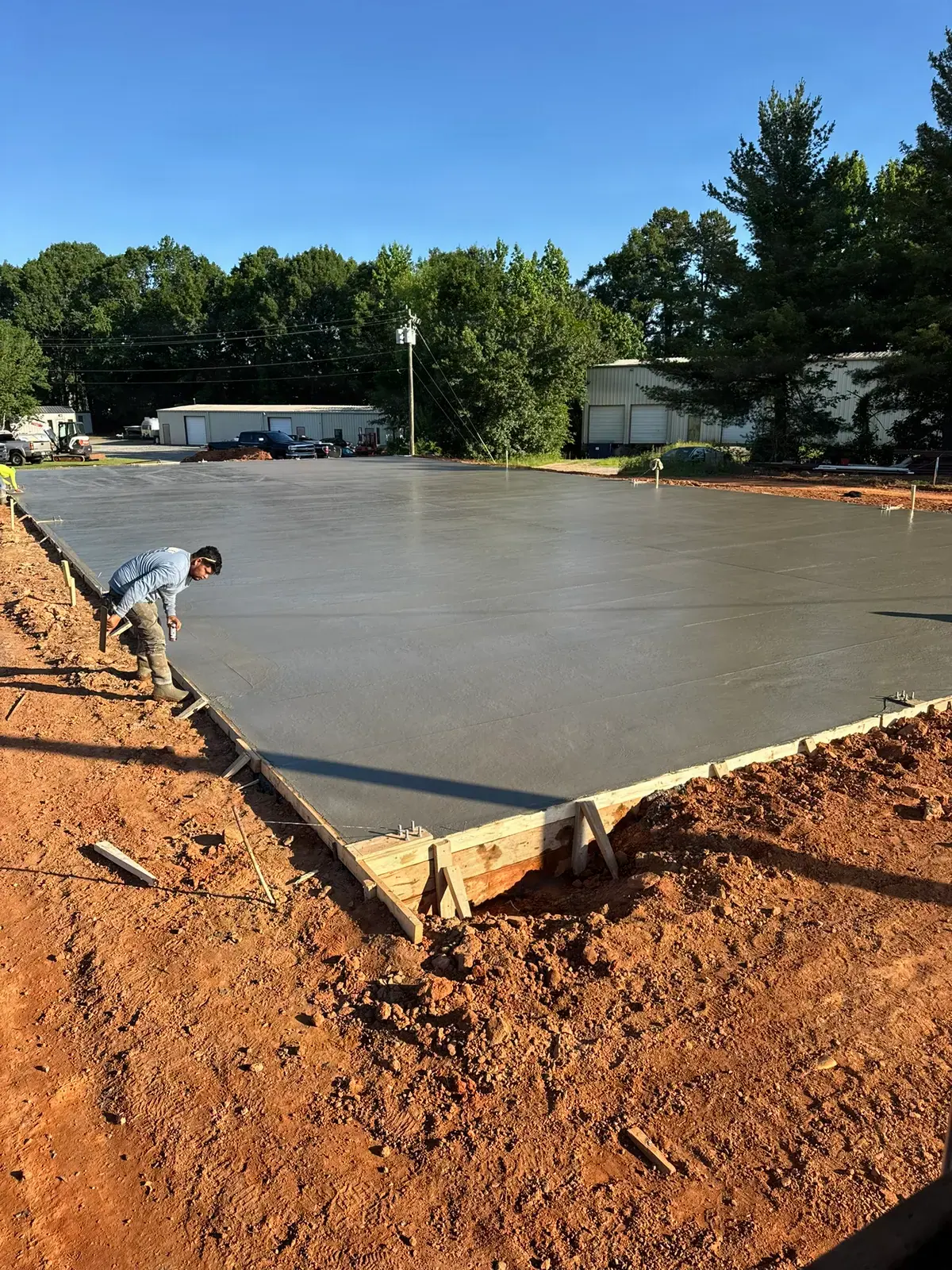
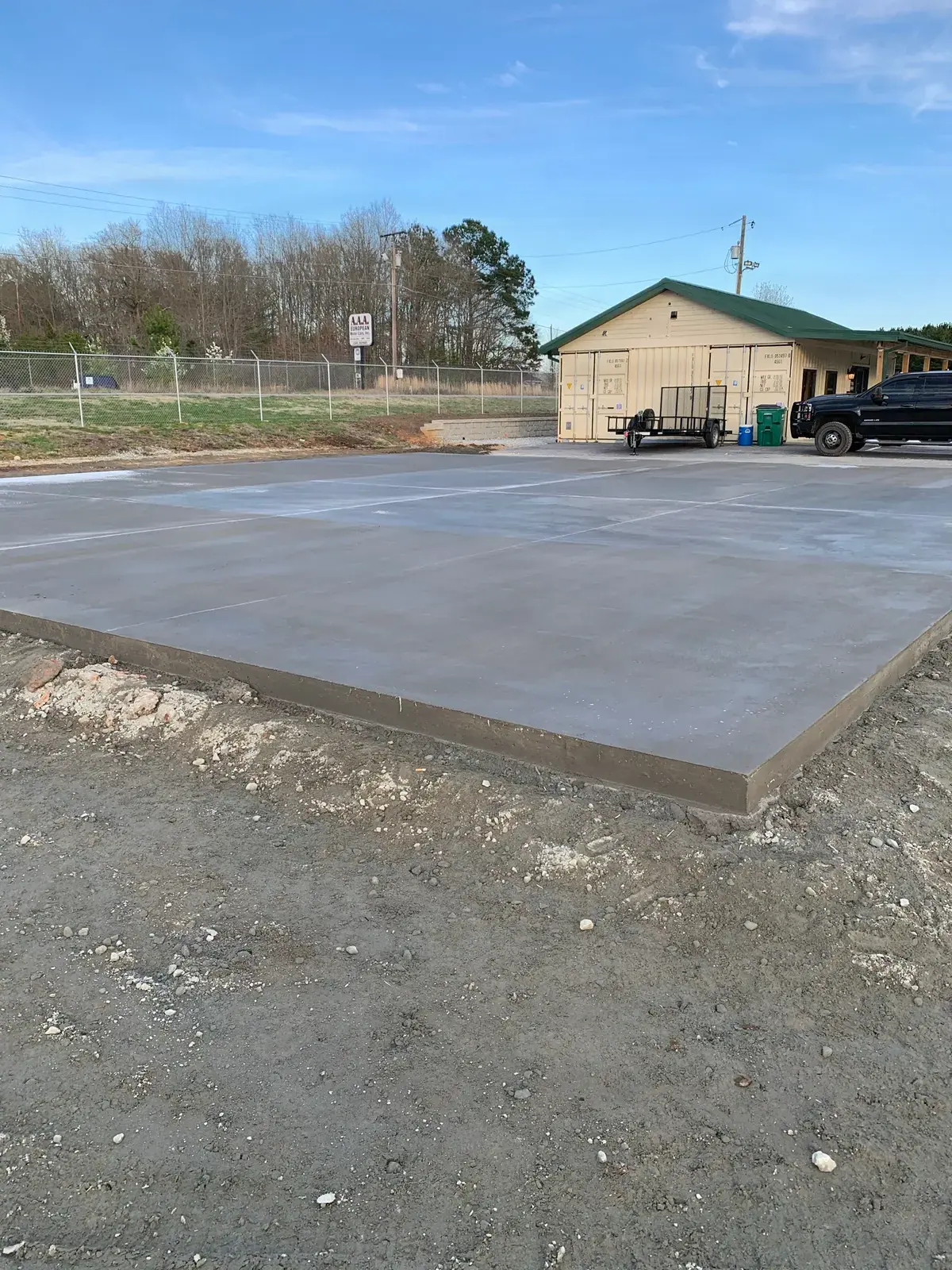
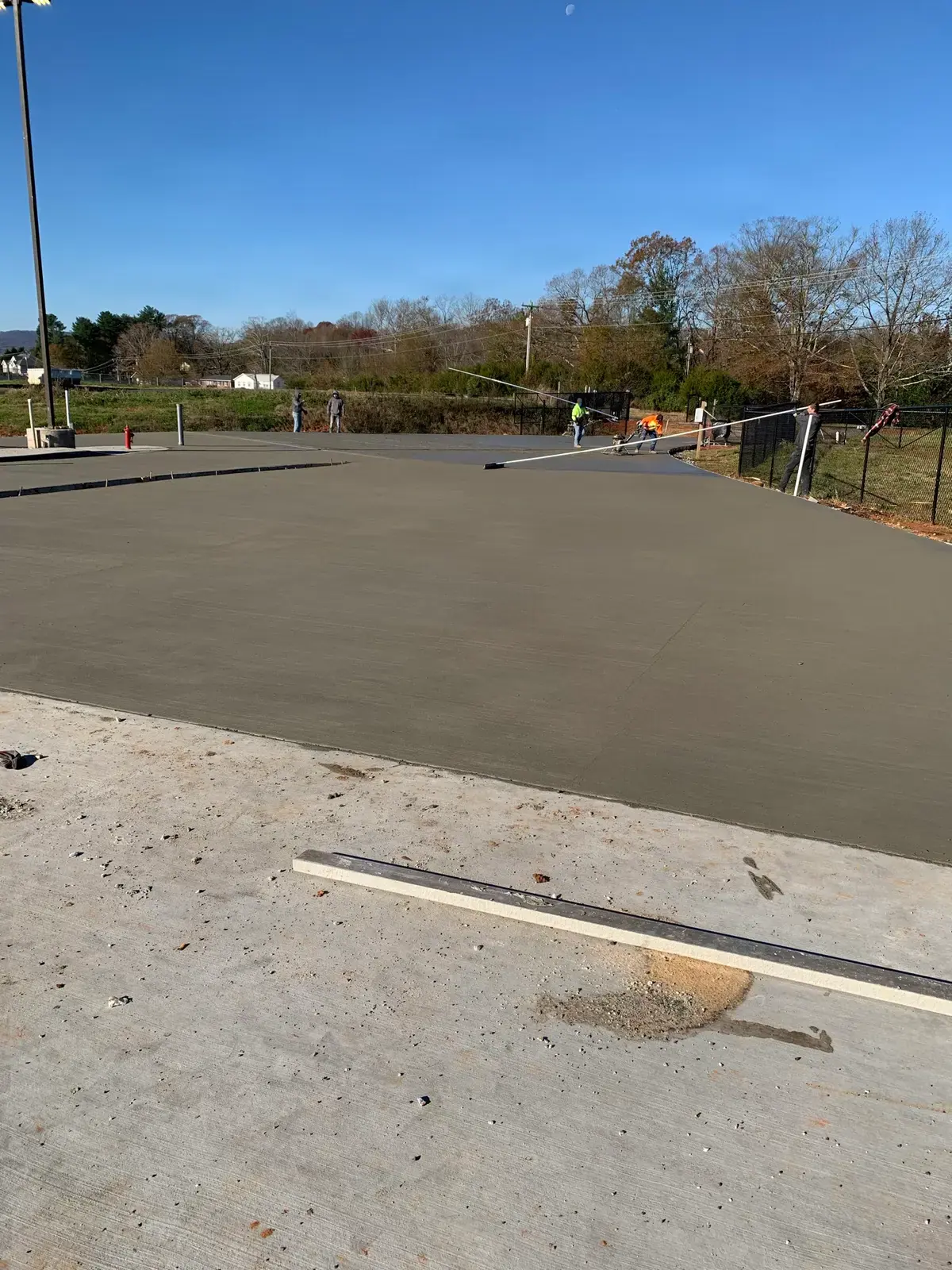
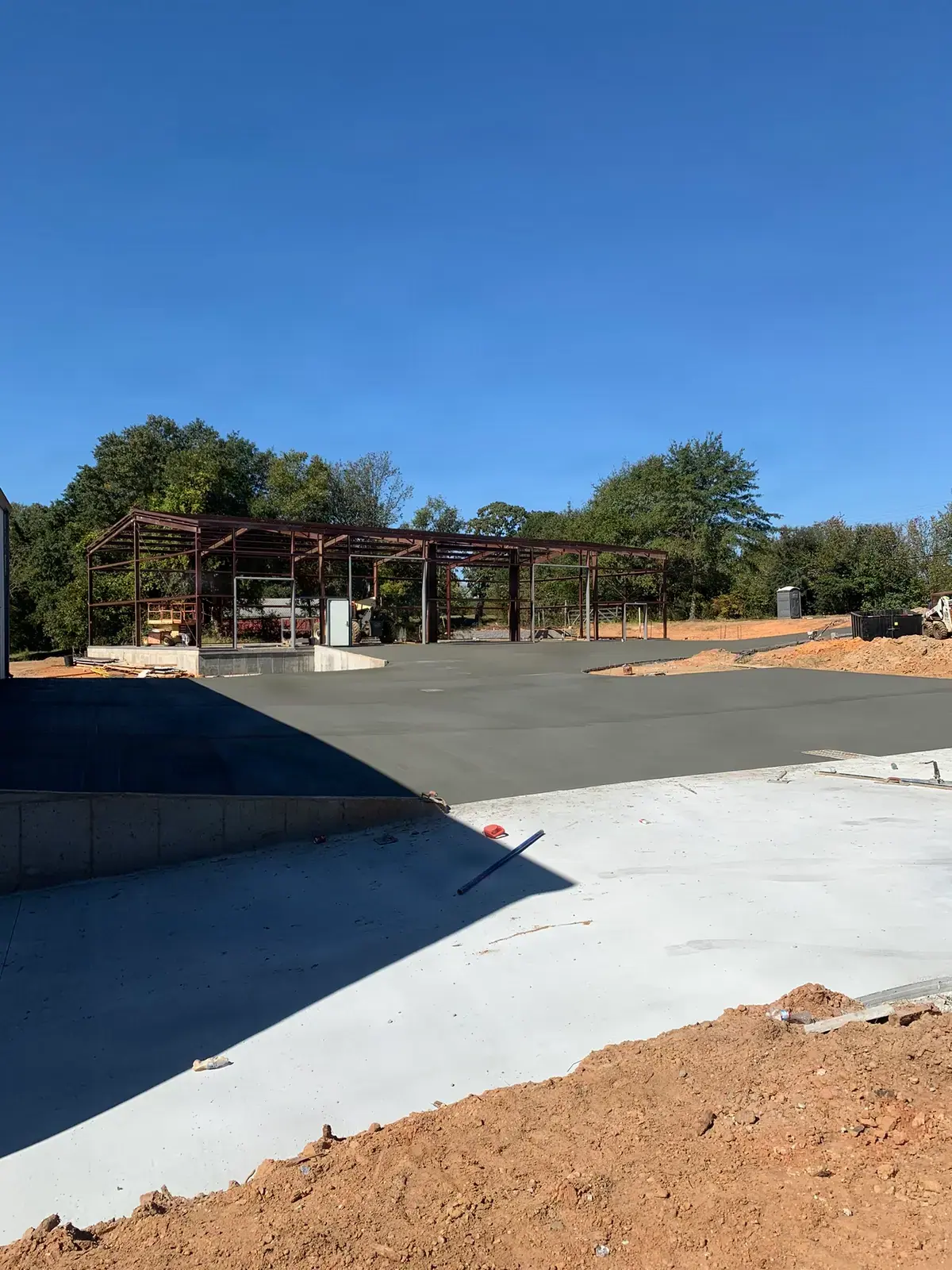
Most of the slabs we pour sit under something. The work we leave behind includes slabs for shop buildings set next to steel buildings, pads on graded lots of red clay and a basketball court pad poured in a cleared yard.
A big shop slab is still a slab to us, poured the same careful way as a shed pad, only with more concrete and more trowel work.
We serve homeowners from Greenville out to Anderson and across the Upstate. If an old cracked slab is there now, it comes out first, the same way an old driveway does in a driveway replacement: broken up, hauled off, and the ground under it checked before anything new goes down.
What Is a Slab on Grade?
A slab on grade is concrete poured right on the prepared ground, with no basement or crawlspace under it. The slab is the floor. In construction, a slab is any flat, poured piece of concrete, so a shop floor, a shed pad, a patio and a driveway are all slabs of one kind or another.
For the floor of a home, the South Carolina Residential Code, which adopts the 2021 International Residential Code, sets the minimums. Section R506.1 says: "Floors shall be a minimum 3 1/2 inches (89 mm) thick." Section R506.2.3 calls for a "minimum 10-mil (0.010 inch; 0.254 mm) vapor retarder" between a concrete floor slab and the base under it.
That vapor retarder line has exceptions, and one of them is "Driveways, walks, patios and other flatwork not likely to be enclosed and heated at a later date." Those are the code's own minimums for the floors of a home. What your slab needs depends on what it will carry and the ground under it, and we talk it through with you when we look at the job.
So if you might close in and heat a shop or garage one day, say so before the pour: the retarder goes under the concrete and can't be added later. A slab under a house or a shop often works together with footings at its edges, and our concrete foundations page covers those.
How a Slab Gets Poured
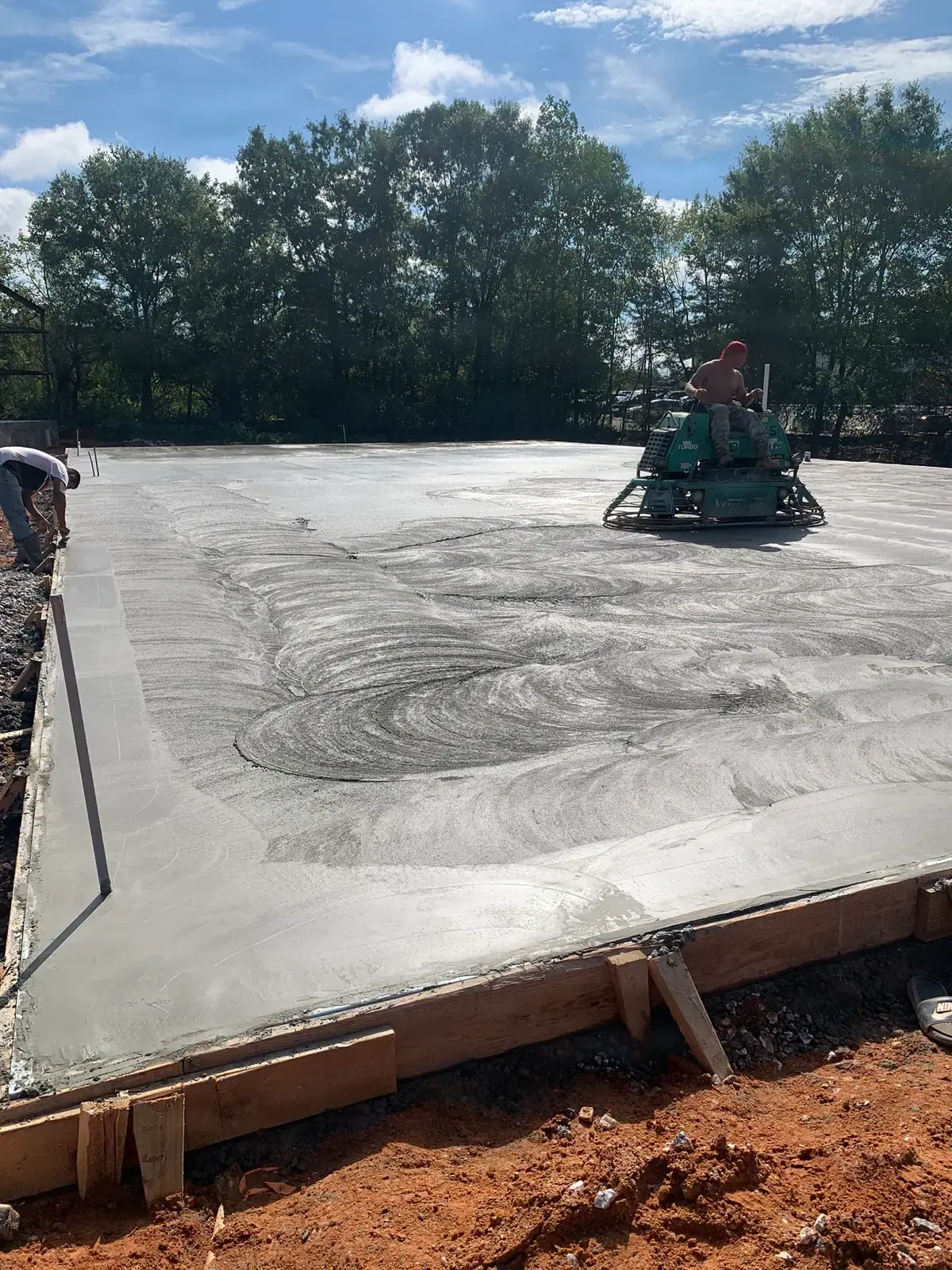
The steps are the same on a shed pad and a shop floor:
- Grade: the pad area is cut and leveled so the slab sits where water runs away from it.
- Base and forms: a gravel base is spread and compacted, and forms are set to the height and edges of the slab.
- Vapor retarder and steel: plastic sheeting goes down where the slab will be enclosed, then wire mesh or a rebar mat where the job calls for it.
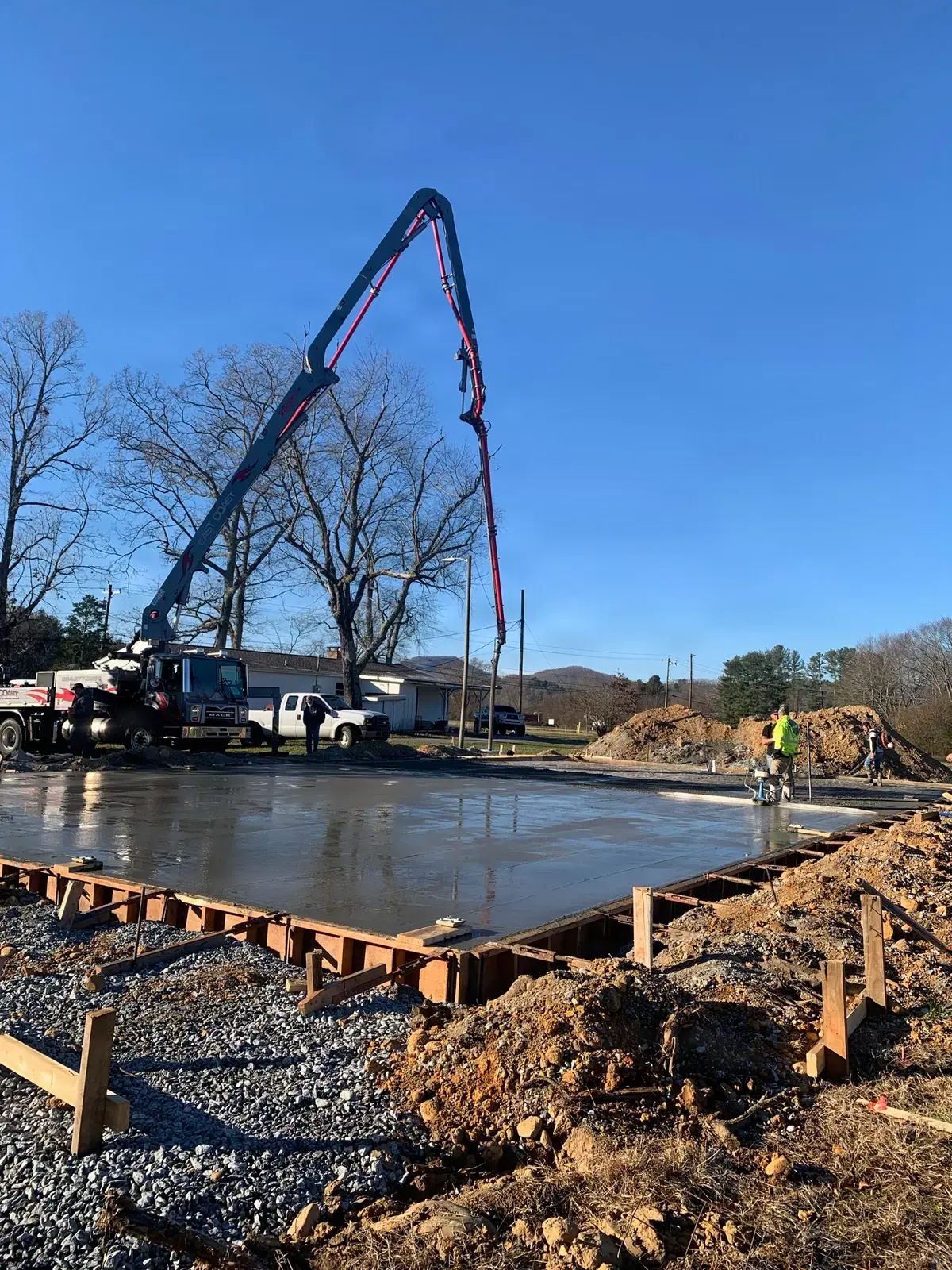
- Pour and screed: concrete comes off the truck chute or from a pump truck, and a screed pulls it flat across the forms.
- Float and finish: a float closes the surface, then a power trowel gives a smooth finish inside, or a broom finish gives grip outside.
- Joints and curing: control joints go in, and the slab is kept covered or damp while it cures.
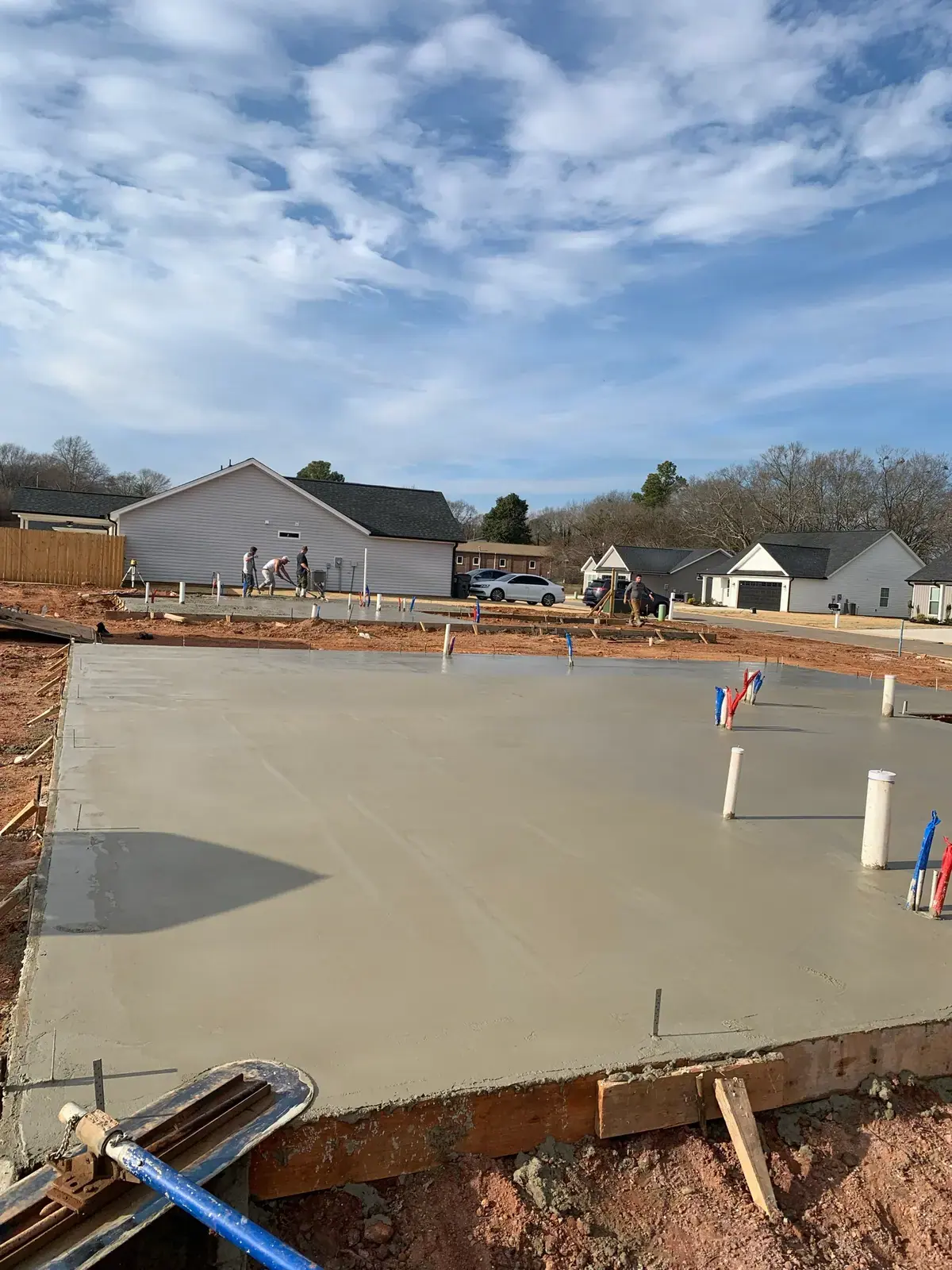
Pipes that come up through a slab are your plumber's work, set before the pour, and we pour around the plumbing sleeves.
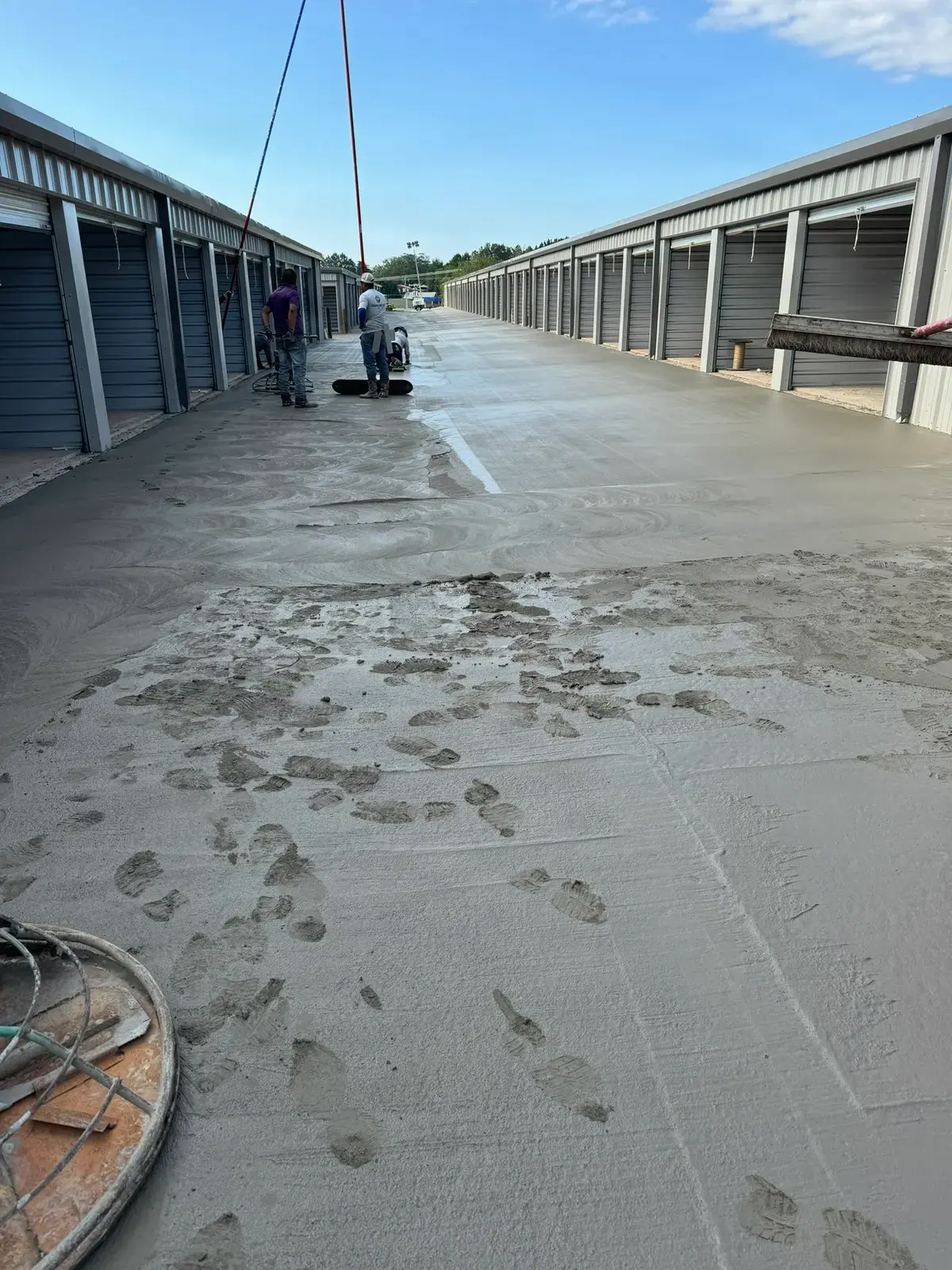
Some slabs go inside, like one we poured in a basement-level space. A pump truck reaches spots a chute can't, and on large pads two power trowels work the surface as it firms up. As we put it, "Making hard work look smooth." Behind it is "Good teamwork and pride in the finish".
Red Clay, Slopes and Upstate Weather
Much of the Upstate sits on red clay. It packs hard when dry, turns soft and slick when soaked, and moves a little between the two. That is why the base matters as much as the surface: a compacted gravel layer gives the slab even support and lets water get out from under it.
Few lots here are flat. On a slope, the pad is cut into the high side and built up with compacted base on the low side, and the forms hold the edge where the ground drops away. How much of that a lot needs is one of the first things we check.
Summer storms can build in an afternoon, so pour day is planned around the forecast, and a fresh slab gets covered with curing paper or plastic. On freeze-thaw nights in winter, water that sits on or under a slab freezes and swells, which is why an outdoor slab is pitched to shed water and the base is there to drain.
Concrete can crack. Control joints give it a straight, planned place to do that, down in the joint instead of across the middle of the slab.
What Decides the Cost of a Slab
From a small shed pad to a big shop floor, there is no set price, because no two slabs sit on the same ground. These decide it:
- The size: how much ground the slab covers and how much concrete it takes.
- The tear-out: whether an old slab has to come out first.
- The ground and the base: how much grading the pad needs and how much gravel goes under it.
- Access for the trucks: whether a truck can back up to the forms or a pump truck is needed.
- The finish: smooth troweled, broom, or a stamp pattern or color on a slab outside.
A slab by the back door for a table and chairs is really a patio, and our patios and walkways page covers those. For any other slab, call or text (864) 279-4405 for an estimate.
Planning a Slab for a Shop or Garage?
Call or text (864) 279-4405 for an estimate.
Photos From Our Jobs
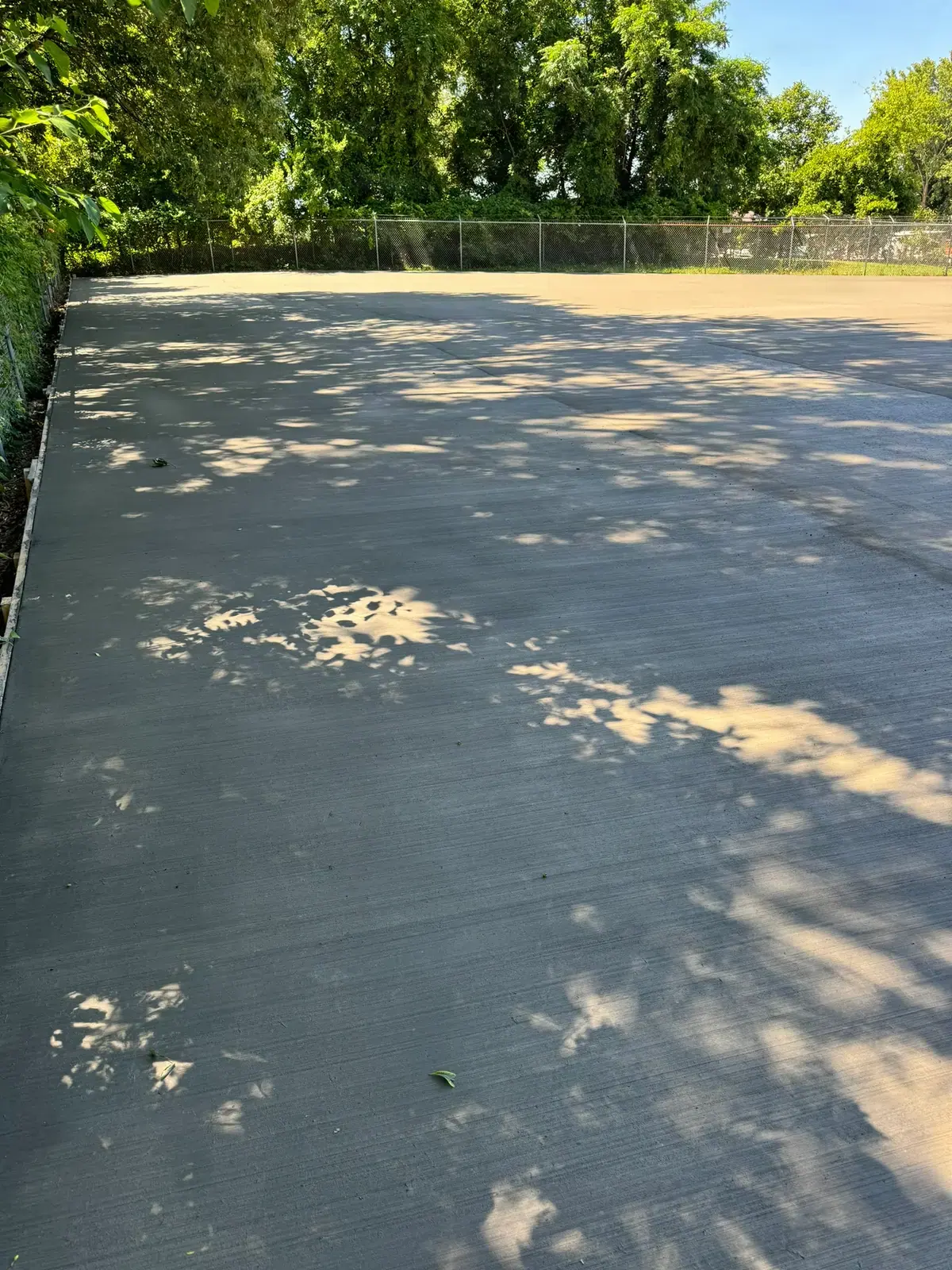
Every photo and video here is from one of our own jobs. Tap one to see it bigger.







Questions We Hear a Lot

-
A slab is the flat concrete floor or pad itself. A foundation is what carries a building's walls: footings dug into the ground, with walls or piers on them. Under a house or a shop the two often work together, and the plans from your builder or designer say how.
-
It depends on what the slab will carry and the ground under it. A shed pad and a shop floor that takes a truck are different jobs, so we tell you what yours calls for when we look at it.
-
That depends on the weather, the mix and what goes on the slab, from foot traffic to a building or a vehicle. The slab is kept covered or damp while it cures, and we tell you on the job what to wait for before you use it.
-
There is no set price. The size, any tear-out, the ground and the base it needs, access for the trucks and the finish you pick all decide it. Call or text (864) 279-4405 for an estimate.
-
Call or text (864) 279-4405, or send the form from the contact page with your location, what you have in mind and a few photos of the area. We will schedule a time to take a look.
-
- Service Area Upstate South Carolina
- Get an Estimate Call, text or send the formDriveways, slabs, patios & more
-


