 Call: (864) 279-4405


- Upstate SC Crew
Serving homeowners in Greenville, Spartanburg, Greer and the Upstate.
- Call or Text
Tell us about your concrete project. Call or text (864) 279-4405.
 Upstate SC Crew
 Call or Text
Concrete Driveways in Greenville, SC
A driveway gets driven on every day and rained on all year. We pour new concrete driveways for new homes, and we widen and extend the ones homeowners have outgrown, around Greenville and across the Upstate.
Rain, Freeze-Thaw and Red Clay Under a Driveway
NOAA's 1991-2020 normals for the Greenville-Spartanburg airport station give 49.67 inches of precipitation a year and about 53.3 freeze-thaw days a year, days when the low drops to 32°F or below and the high climbs back above it.
Put plainly, a driveway here has to shed a lot of rain, summer storms included, and then go through freeze-thaw nights every winter. Water that soaks in under a slab softens the red clay, and water that sits in a crack freezes and pushes it wider. That is why the slope, the base and the control joints matter more than the surface you see.
We serve homeowners all over the Upstate, from Spartanburg out to Easley. Every driveway starts with a visit: we walk the ground with you and see where the water goes now.
New Driveways, Widening and Extensions
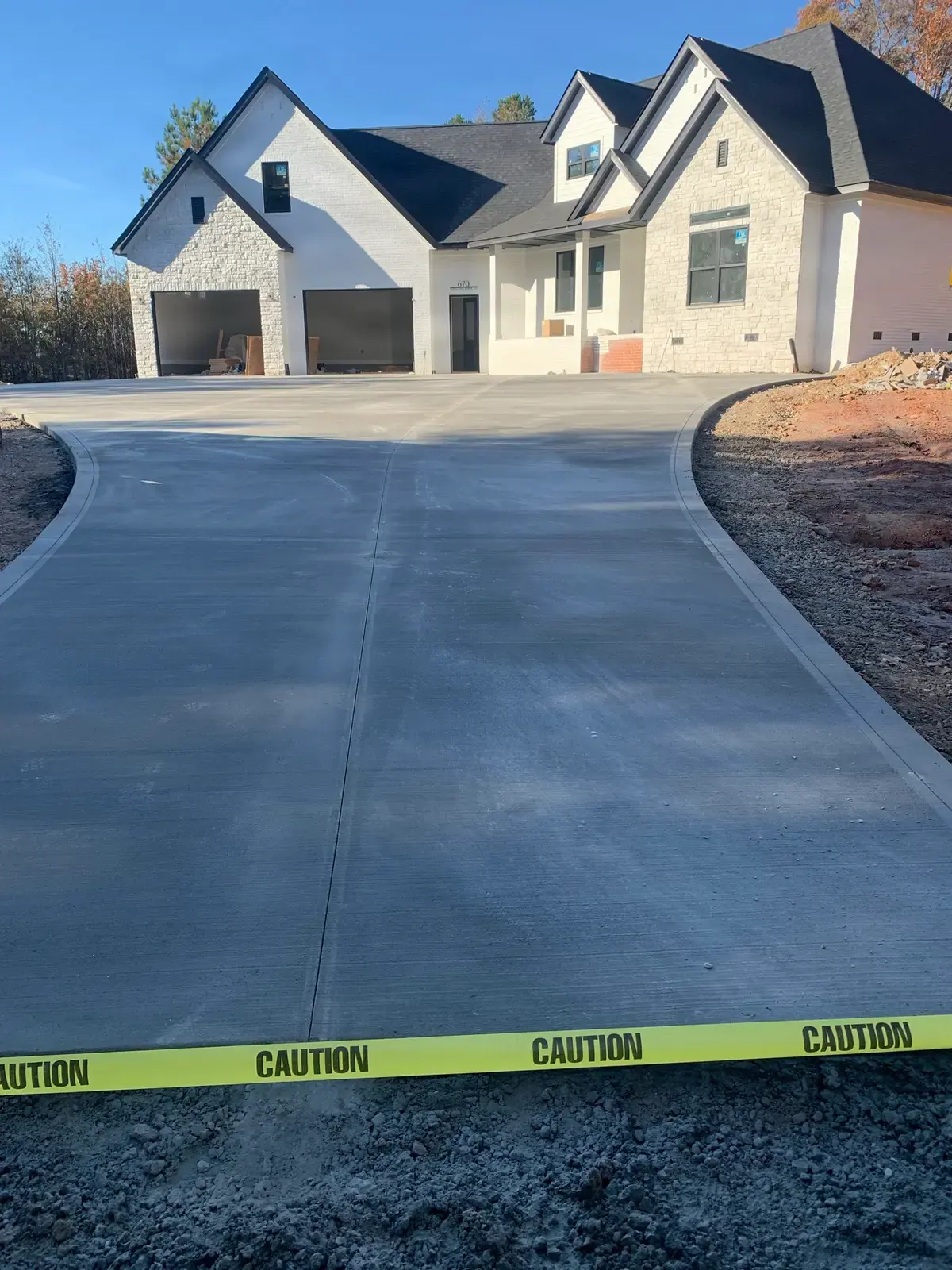
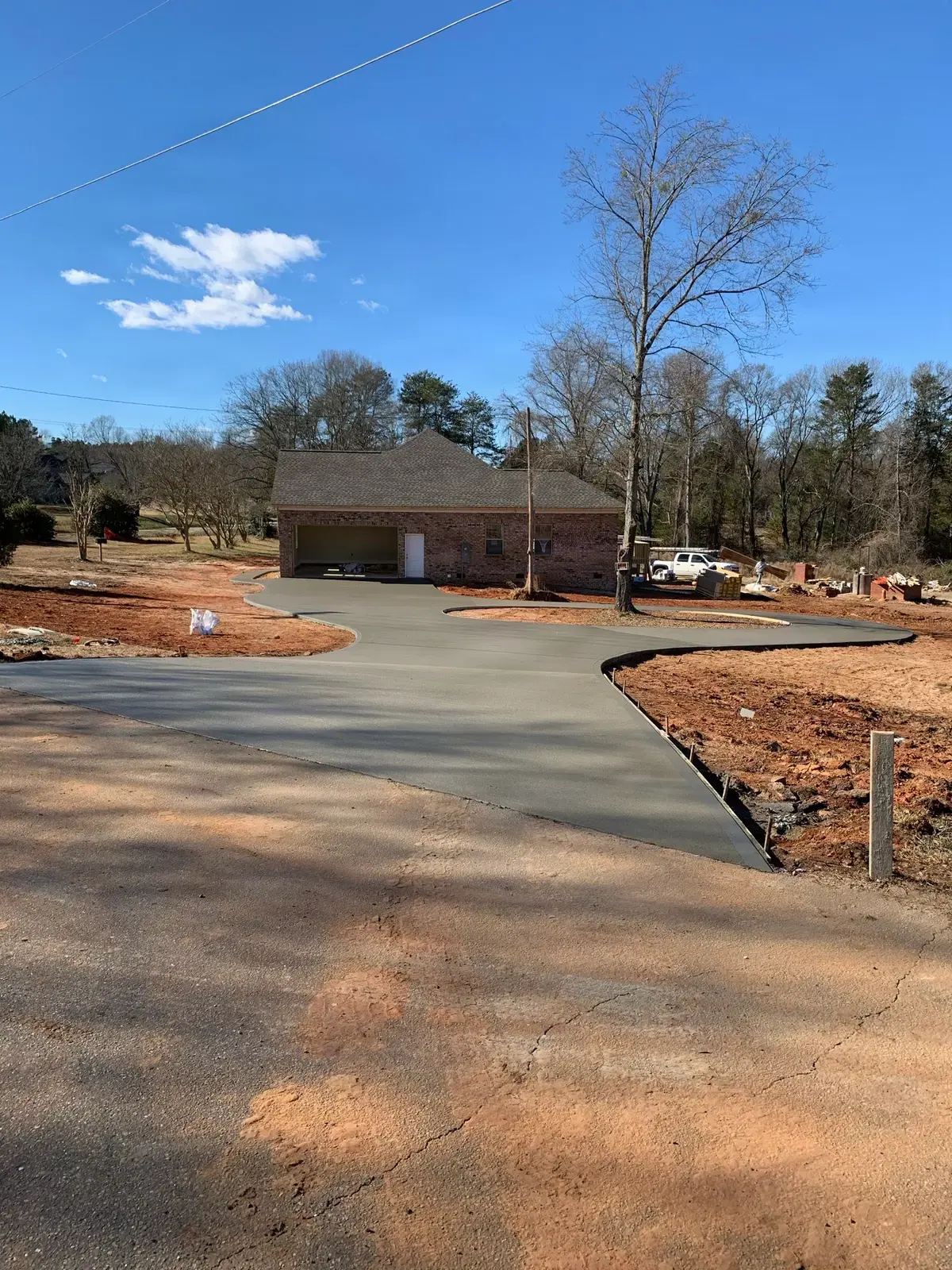
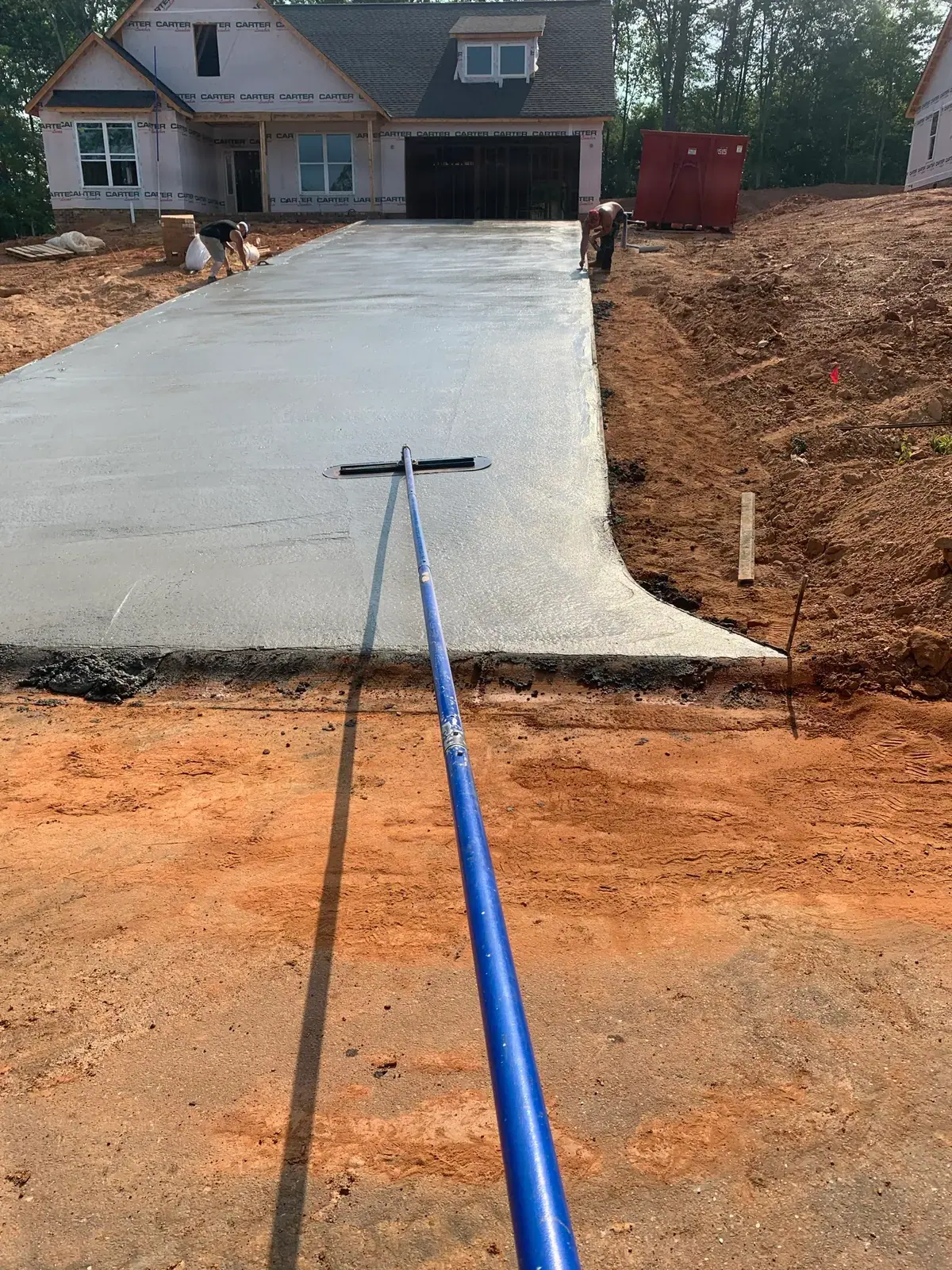
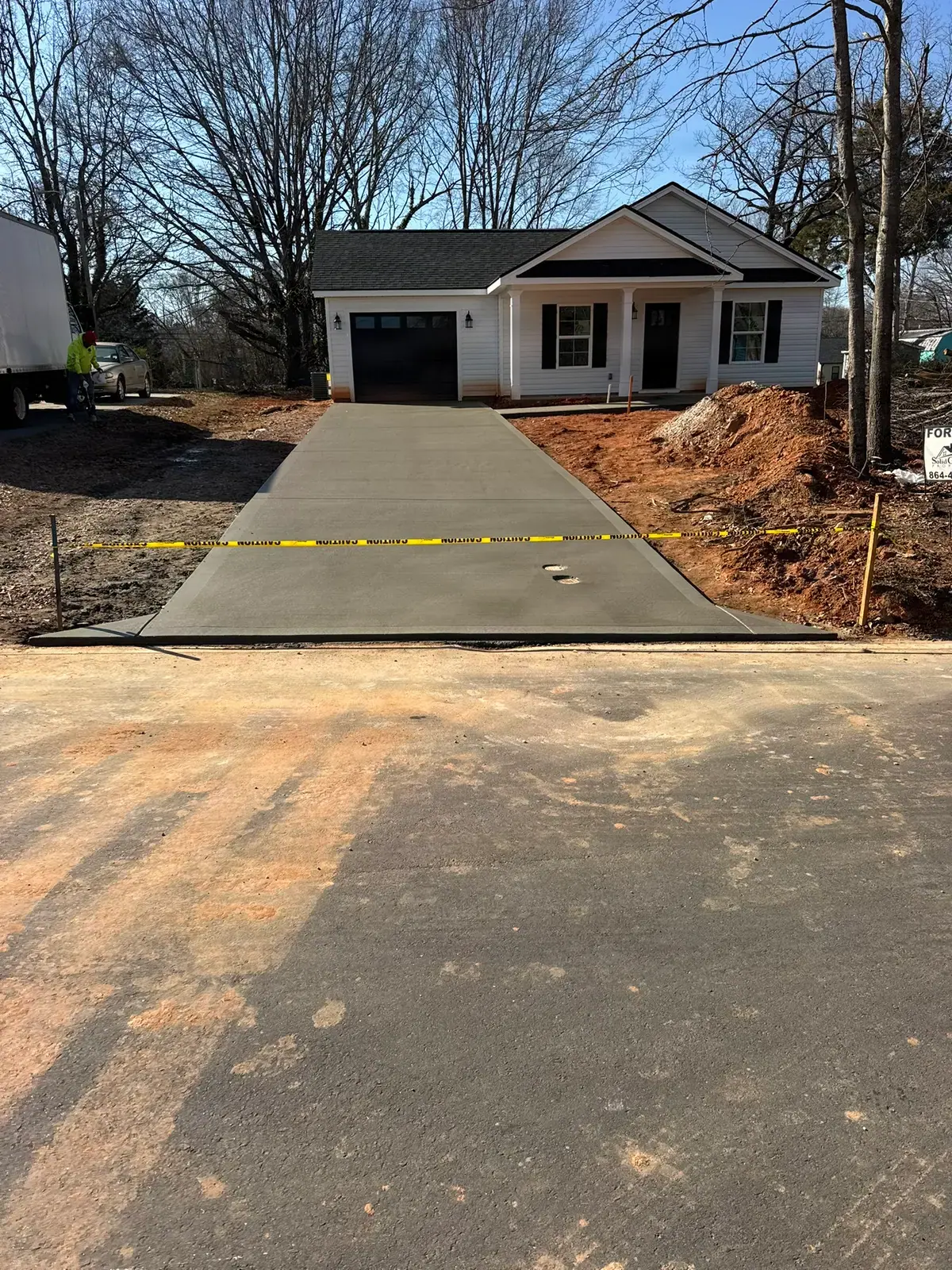
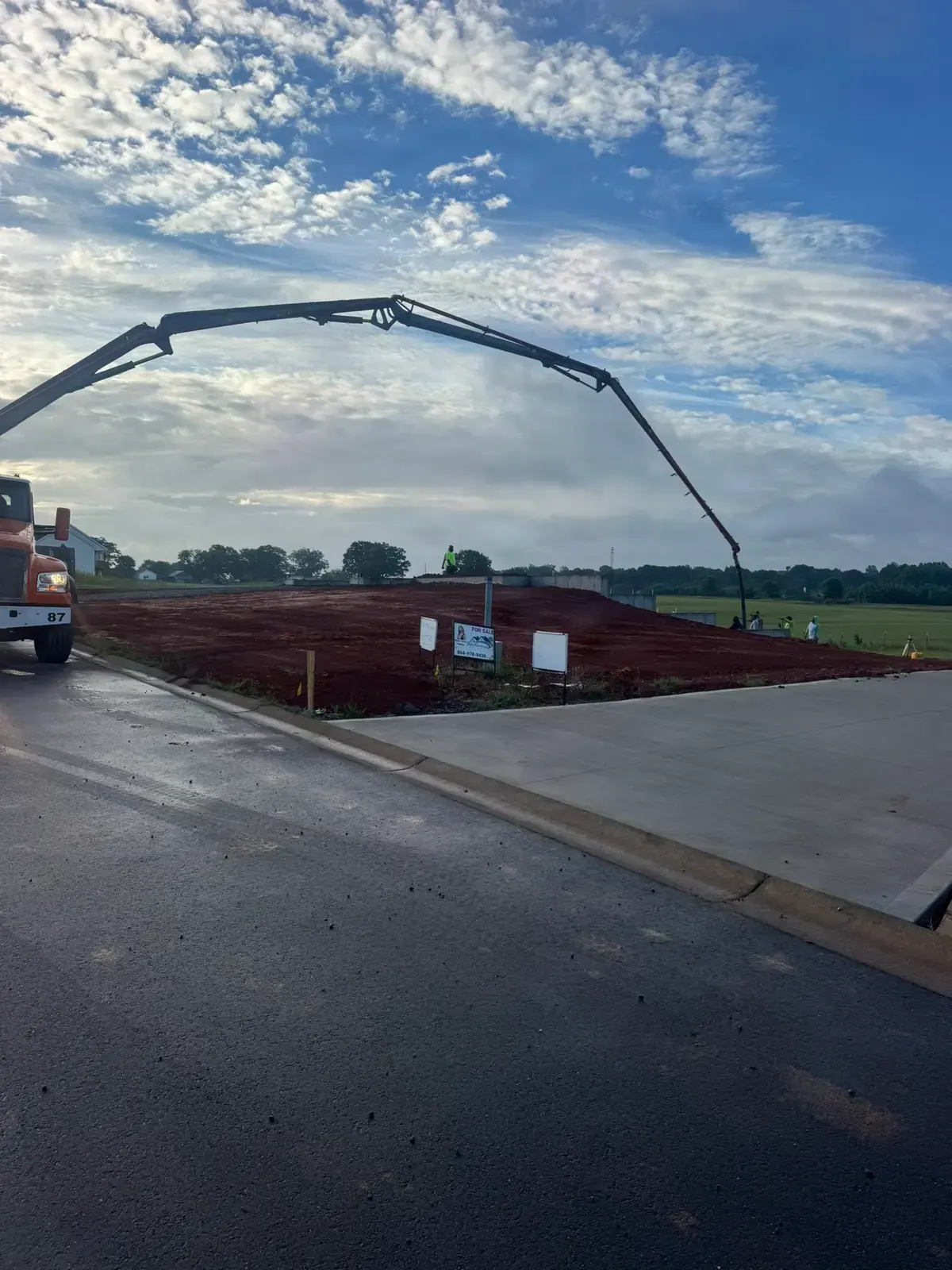
On a new house, the driveway often starts as bare, graded red clay. Our crew sets the forms to the layout, curved or straight, builds and compacts the base, and pours it into a finished driveway. We have poured long driveways between the trees and up to a farmhouse, and a wide new one up to a large house.
Plenty of driveways are simply too small for the cars a household has now. As we put it: "Tired of shuffling cars around or parking in the grass? A little more driveway space can make a big difference." Extra room can take a few shapes:
- A parking pad beside the drive, so another car has a spot off the lawn.
- A wider drive, so two cars can sit side by side.
- A wider entrance, so you are not clipping the edge as you turn in.
- A turnaround, so you can pull out forward instead of backing out to the road.
We have poured two new pads in front of a stone-front house, and a driveway along a block retaining wall.
Tying New Concrete to the Old
When we add on to a driveway that stays, the new concrete meets the old at a joint, a planned line between the two slabs. Be ready for the color: new concrete is lighter at first, and old and new rarely match exactly. If the old driveway is cracked, sunken or breaking up, it can make more sense to go with driveway replacement, tearing it out and pouring new, than to tie fresh concrete onto it.
Base, Slope and Control Joints
The concrete is only the top of the job. What decides how it holds up through Upstate rain and winter nights sits under it and is built into it:
- The ground: topsoil, roots and soft spots come out, down to firm ground, since red clay goes soft when it is soaked.
- The base: gravel goes in and is compacted, so the slab sits on something firm and even.
- The forms: boards staked to the line and grade of the drive, so the edges run straight or the curve stays smooth.
- The slope: the surface is pitched so rain runs off to the street or the yard, not toward the garage or the house.
- Control joints: lines cut or tooled into the slab before it has a chance to crack on its own.
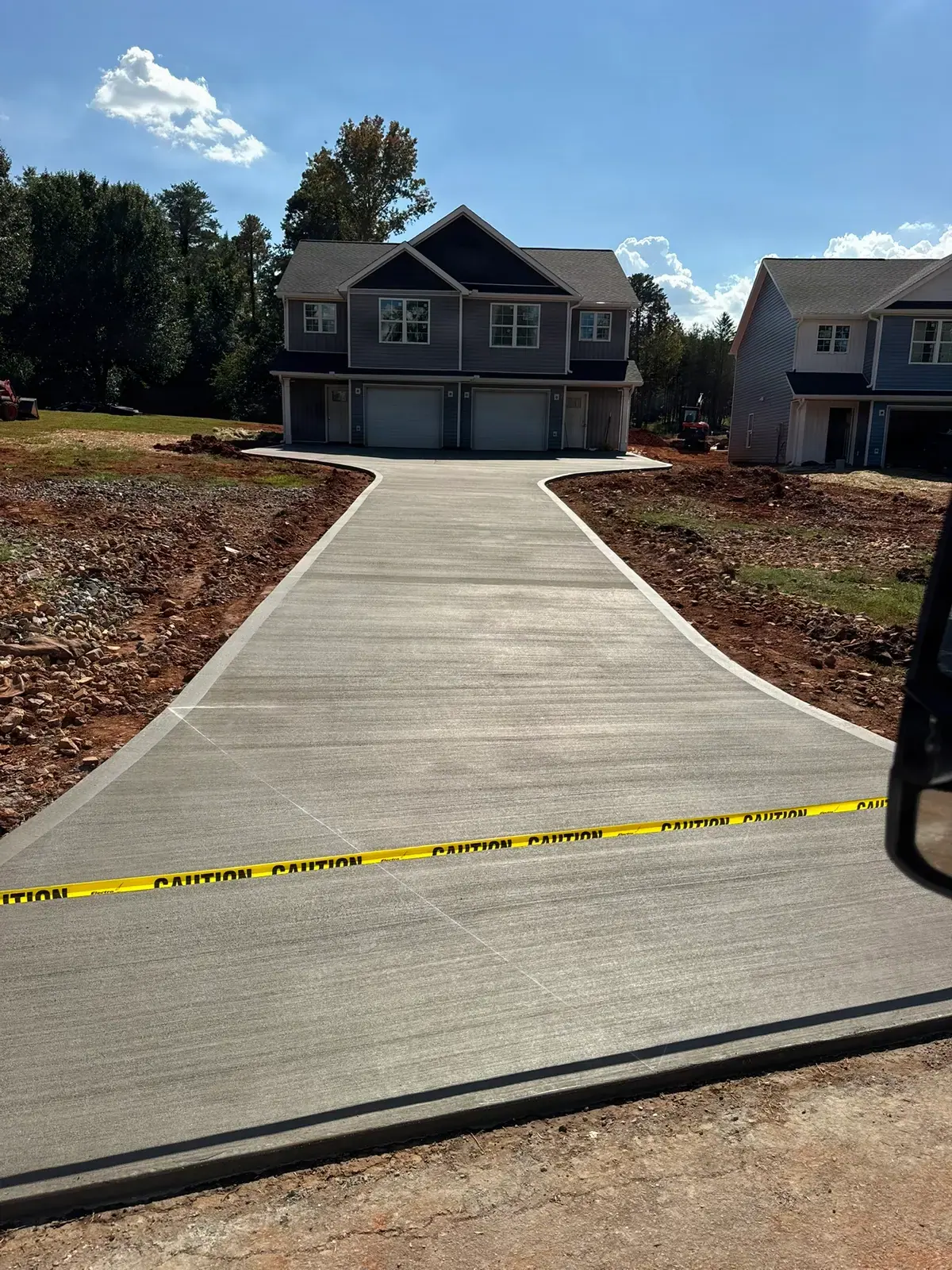
Concrete shrinks as it cures, and that pulls on the slab. Control joints decide where it cracks: each one is a weak line on purpose, so a crack runs along it instead of wandering across the drive. On one driveway we saw-cut a joint pattern in front of the garage, where the joints look neat in their own right.
How deep the base goes and where the joints fall depend on your ground, the slope of the lot and the size of the driveway, so we set them at your house, not from a chart.
Layout and Finish
A few things to decide before the forms go in:
- Straight or curved: a curve can follow the lay of the lot or swing around a tree.
- How cars turn in: how wide the entrance is, and whether you want room to turn around.
- Where the water goes: on a sloped Upstate lot, which way the rain runs off and where it ends up.
- The finish: how the surface looks and feels underfoot.
Most driveways get a broom finish. After the concrete is screeded and floated, a broom is pulled across it to leave fine ridges that give tires and shoes grip on a wet morning.
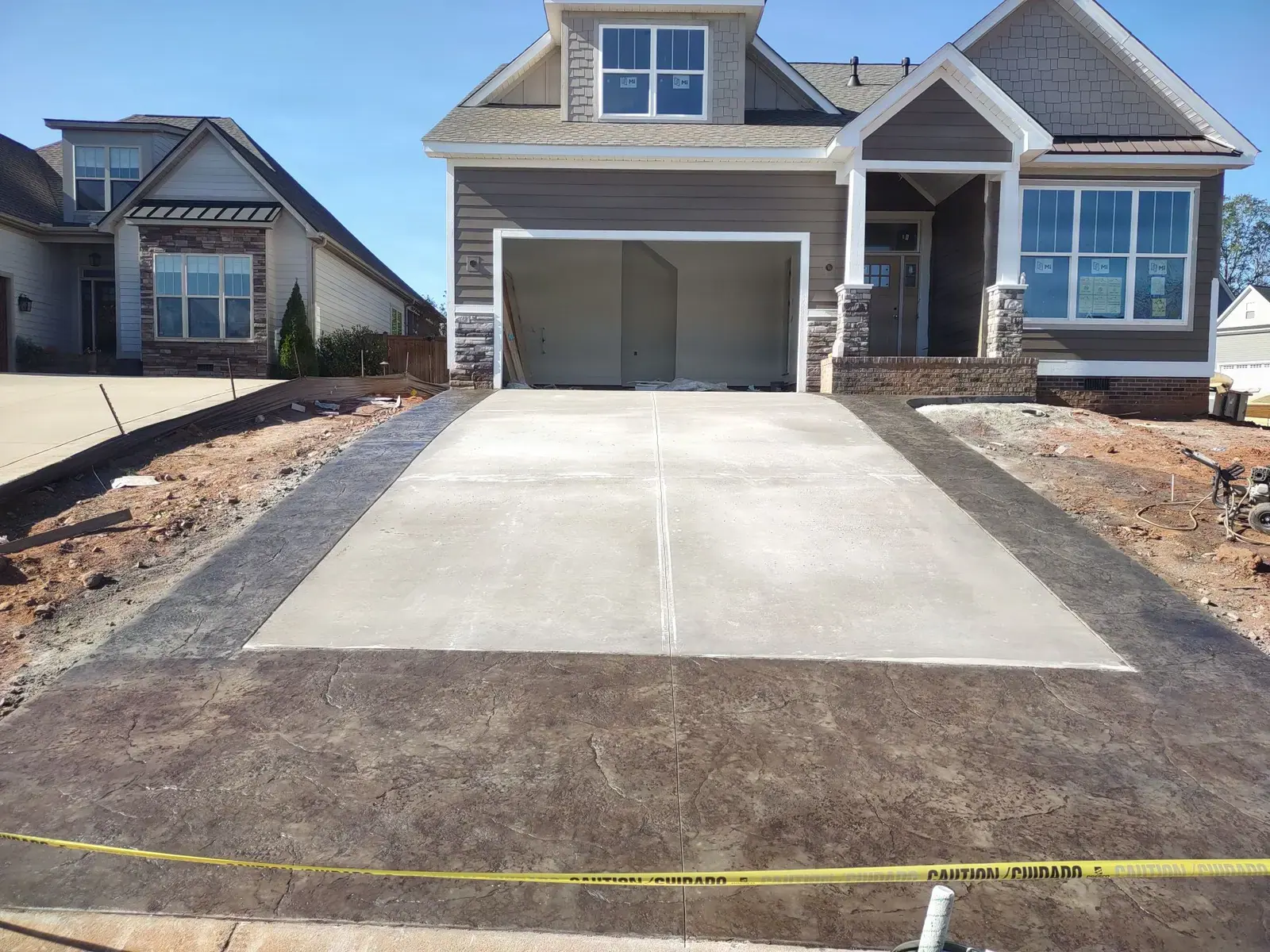
For some character, a border can frame the drive. We have poured a driveway with a dark stamped border, and stamped concrete or decorative concrete with color can dress up the edges or the entry while the rest stays broom finished.
Concrete or Asphalt for a Driveway?
It is a fair question, and both have their place. We pour concrete, not asphalt, so we can only speak to our side of it.
Asphalt is laid hot and rolled, and it stays a little flexible. Concrete is poured, finished and cures hard, it is lighter in color, and it can take a broom finish, a stamped border or color. Which one costs less depends on the job, so the fair way to compare is an estimate for each.
What Decides the Cost of a Concrete Driveway
There is no set price for a driveway, because no two lots are the same. What decides it:
- The size: how long and how wide the driveway runs.
- The tear-out: whether an old driveway has to come out first.
- The ground and the base: how much digging, fill and gravel your lot needs, and how steep it is.
- Access: how close the concrete trucks can get to the forms.
- The finish: a broom finish, or the stamp pattern, border or color you pick.
Send us your location and what you have in mind, and we will schedule a time to take a look.
Ready for More Driveway?
Call or text (864) 279-4405 for an estimate.
Photos From Our Jobs
Every photo and video here is from one of our own jobs. Tap one to see it bigger.
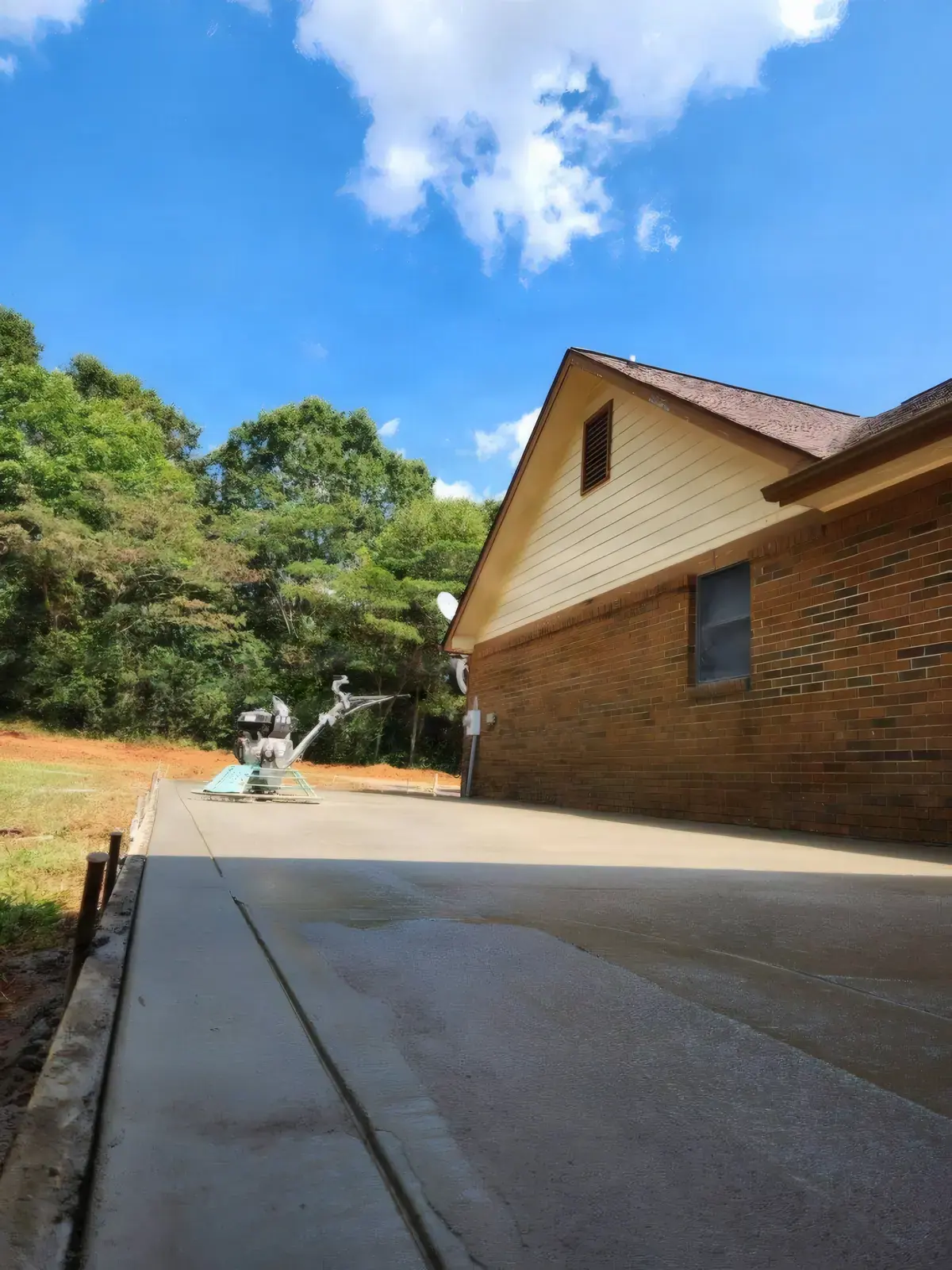

 Reel 0:10 Driveway extension
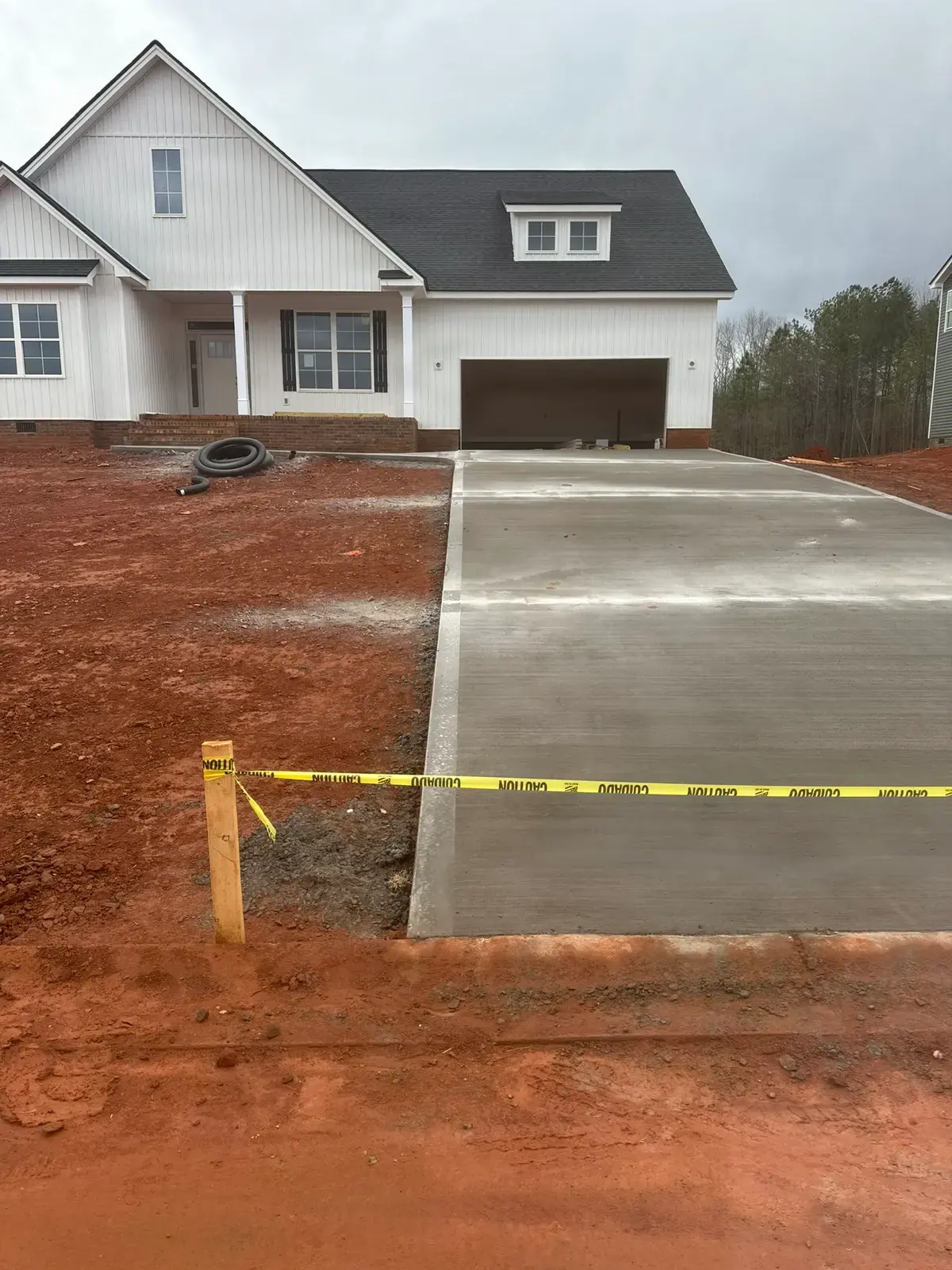
 Video 0:10 Long driveway, from the pour to the finish

 Video 0:26 Driveway pour with stamped border strips


 Video 0:24 Curved driveway up to a white house
Questions We Hear a Lot

-
There is no set price, because every driveway is its own job. The size, any old driveway that has to come out, the ground and the base it needs, how close the trucks can get and the finish, stamp pattern or color you pick all decide it. Call or text (864) 279-4405 for an estimate.
-
It depends on the weather on pour day and the days after, the mix and the size of the job, and concrete cures differently in an Upstate summer than in a cold snap. We tell you when you can walk on it and when you can drive on it once we look at your job. Call or text (864) 279-4405 with your questions.
-
Often, yes, if the old concrete is still in good shape. The new part meets the old at a joint and starts out lighter in color, so the two rarely match exactly. If the old driveway is badly cracked or sunken, replacing it may make more sense, and we tell you which when we look at it.
-
Concrete can crack, and we will not promise it won't. A firm, compacted base, a slope that sheds the rain and control joints that give the shrinking slab a planned place to crack are what the work is for.
-
Call or text (864) 279-4405, or send the form from the contact page with your location, what you have in mind and a few photos of the area. We will schedule a time to take a look.
-
- Service Area Upstate South Carolina
- Get an Estimate Call, text or send the formDriveways, slabs, patios & more
-


